
Stormwater management & drainage solutions in Bridgewater, NJ
Drywell systems, French drains, catch basins, swales, and basin maintenance for commercial properties, HOAs, and homeowners across Somerset County. If your property has flooding, standing water, or drainage problems, PTB installs the system that actually fixes it.
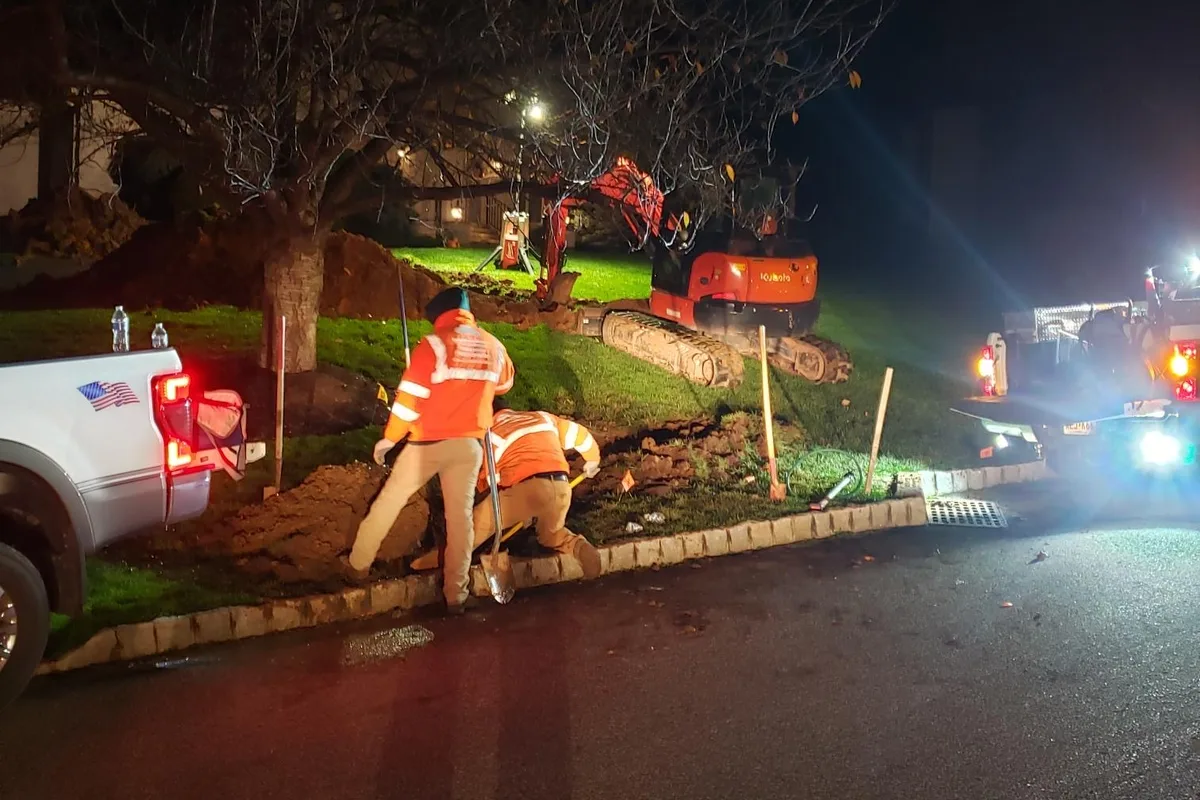
When water finds the low points, damage follows
Standing water in the yard, flooding at the foundation, eroded landscape beds, ponding parking lots. Without a working stormwater system, water goes where it shouldn't and causes damage that costs a lot more to fix than the drainage that would have prevented it. PTB installs the systems that actually work.
The right fix depends on the property. Drywells collect and disperse runoff into the soil. French drains redirect water underground through gravel and perforated pipe. Swales guide surface water naturally along a graded channel. Catch basins collect large volumes at low points before they pool on pavement. Most properties end up with a combination, sized to the site, the soil, and the volume of water that actually needs to move.
Homeowners, HOAs, and commercial owners
PTB works with homeowners dealing with a wet backyard or a flooding foundation, HOAs and apartment communities managing shared drainage across a whole property, and commercial owners who need both installation and ongoing basin maintenance to stay compliant with NJDEP and their town's MS4 permit. Same crews, scaled to the project.
What NJ commercial property owners are actually on the hook for
Four facts most property managers only learn about after a Notice of Violation lands. Better to know them now.
NJDEP N.J.A.C. 7:8 governs stormwater in NJ.
Any "major development" (1+ acre of land disturbance since February 2, 2004) falls under the state's stormwater management rules. Most commercial sites and HOAs built in the last two decades qualify.
The maintenance plan is recorded on your deed.
NJDEP requires the stormwater maintenance plan to be filed as a deed notice on the property. The obligation runs with the deed, which means whoever owns the property next inherits it, whether they know about it or not.
Your town can inspect and enforce.
Under their MS4 stormwater permits, municipalities are authorized to inspect privately owned stormwater facilities and issue Notices of Violation for neglected maintenance.
Fines escalate fast.
A typical NOV comes with 30 days to remediate. Continued non-compliance after that can escalate to fines that industry benchmarks put as high as $2,000 per day in some jurisdictions.
What PTB installs (and maintains)
Drywell Systems
Underground chambers that collect runoff and slowly disperse it into the surrounding soil. The right fix when the property doesn't have a clean outlet to send water to, and the goal is to soak it away instead of piping it out.
French Drains
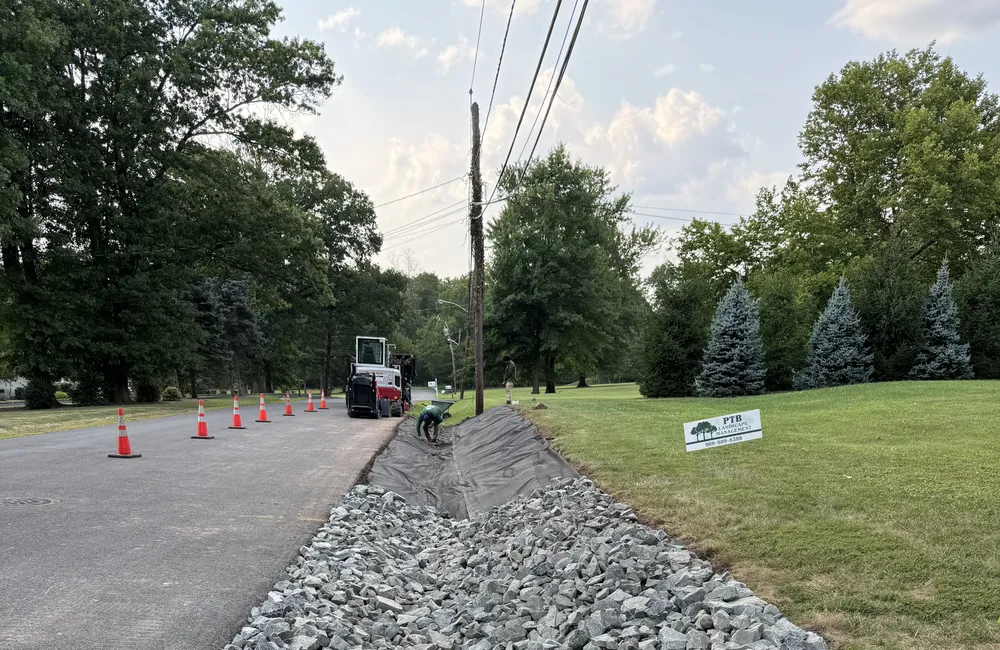
Perforated pipe laid in a gravel-filled trench, wrapped in filter fabric, buried below the surface. Collects groundwater along its length and redirects it away from foundations, low spots, or wet areas of the yard.
Swales & Bioswales
Shallow, graded channels that guide surface water naturally along a defined path. Effective on lawns and open ground where you want to move water without digging up the property for buried pipe.
Catch Basins & Storm Drains
Grated inlets that collect large volumes of surface runoff before it pools on pavement or lawn. Used in driveways, parking lots, and low points, then piped to a suitable outlet.
Detention & Retention Basin Maintenance
For commercial properties and HOAs with existing basins: cleanouts, sediment removal, catch basin service, vegetation and outlet management, and inspection reports for the town's MS4 program.
Erosion Control & Regrading
Rip-rap installation, slope stabilization, and regrading to send water where it should go. Sometimes the real fix isn't a pipe or a basin, it's changing the shape of the ground itself.
Call PTB if you see any of these on your property
Not every one of these is a failed basin, but every one of them is worth a look before your next inspection.
-
Standing water more than 72 hours after a storm.
A working detention basin drains down within days. Water that lingers past 72 hours usually means the outlet is clogged, the underdrain has failed, or the basin bed has silted in.
-
Erosion around the inlet or outlet.
Exposed soil, scoured rip-rap, or cut channels around the pipes are early signs the structure is losing the fight against the flow. Cheap to fix now, expensive to fix once it undermines a headwall.
-
Sediment buildup in the basin bed.
A basin that looks half full even on a dry day has lost that much of its storage capacity. That capacity is what the design counted on to protect downstream property.
-
Dead vegetation at the outlet.
Ironically, a dead ring of grass around the outlet often means the basin is holding water too long. That's inspection-report territory.
-
Cracked or crumbling headwalls, weirs, or riser structures.
Concrete structures don't fail all at once. Small cracks turn into big ones. If you can see it from the surface, it's already worth an assessment.
-
Ponding at low points in parking lots or drives.
Pavement isn't supposed to hold water. When it does, the base underneath is saturating, and the pavement is on its way to rutting or collapsing.
Three steps from problem to compliant.
Site Walk & Basin Assessment
PTB walks the basin, catch basins, and drainage features on your property. What's holding water, what's silted in, what's overgrown, what's cracked. Photos and notes.
Written Findings + Maintenance Plan
You get a clear write-up of what needs doing, priced by the actual work, and a plan for the routine maintenance that keeps the system passing inspections going forward.
Ongoing Service & Records
PTB does the work on the schedule the plan calls for, documents every visit with photos and notes, and keeps records the town or your board can see whenever they ask.
Stormwater questions, answered by PTB.
What does PTB actually do for a stormwater system on a commercial property or HOA?
PTB installs drainage systems for both residential and commercial properties: drywells, French drains, swales, catch basins, and erosion control work. For commercial properties, HOAs, and apartment communities with existing detention or retention basins, PTB also handles the ongoing maintenance side: cleanouts, sediment removal, catch basin service, vegetation and outlet management, and inspection reports the property manager can hand to the town.
How often does a detention basin need to be cleaned or inspected?
Inspection frequency depends on the town's MS4 permit, but industry standard is quarterly to annual inspections. Sediment removal typically runs every one to three years depending on basin size and runoff load. PTB assesses the basin and sets a maintenance schedule that fits the property and keeps the town happy.
Who's responsible for maintaining a stormwater basin on private property?
The property owner. NJDEP requires the maintenance plan to be recorded as a deed notice, so the responsibility runs with the deed. New buyers inherit it whether they know about it or not. Property managers and HOAs need a maintenance contractor on file from day one.
What happens if the property doesn't stay on top of stormwater maintenance?
The town can inspect the basin under its MS4 permit and issue a Notice of Violation. Typical NOVs come with 30 days to remediate. Continued non-compliance escalates to fines that industry benchmarks put as high as $2,000 per day in some jurisdictions. Beyond fines, neglected basins can cause pavement damage and downstream flooding that get expensive fast.
What determines the cost of drainage installation or a maintenance contract?
The regulatory frame drives the contract more than anything. The town's MS4 permit sets inspection frequency (quarterly, semi-annual, or annual), which sets the visit count. Basin size and sediment load determine cleanout cost per visit (industry benchmark around $250 per basic pond inspection, higher for full cleanouts). If structural repairs to headwalls, outlets, or riprap are on the punch list, that adds to the number too. HOA and commercial contracts often bundle quarterly inspections with an every-3-year sediment removal on a fixed annual price so the property manager can budget.
What's the difference between a detention basin and a retention pond?
A detention basin holds stormwater temporarily and drains it out through an outlet after the storm. A retention pond holds water permanently as a designed feature and only releases overflow. Both need maintenance, but the work is different. PTB handles both.
Do NJ property owners have paperwork or filings for stormwater compliance?
Yes. The maintenance plan is on file as a deed notice from when the property was built. Beyond that, the town's MS4 program can request inspection records and maintenance logs. PTB keeps dated, photo-supported service records so the property manager can hand them over when the town asks.
What are the signs a stormwater basin needs attention?
Standing water more than 72 hours after a storm, erosion around inlets or outlets, sediment buildup in the basin bed, dead vegetation at the outlet, cracked structures like headwalls or weirs, and ponding at low points in parking lots. Any one of those is worth a look before the next inspection.
Not sure if your basin passes its next inspection?
PTB walks the property, tells you what needs doing, and puts a straight number on it. Faster to fix a small problem now than to fix a Notice of Violation later.

Talk to PTB about your stormwater system.
Commercial property, HOA, or apartment community. PTB walks the site, tells you what it needs, and puts a straight number on the fix.
908-809-8388