
How to Fix Drainage Problems the Right Way: Yard Drainage Solutions NJ Homeowners Trust
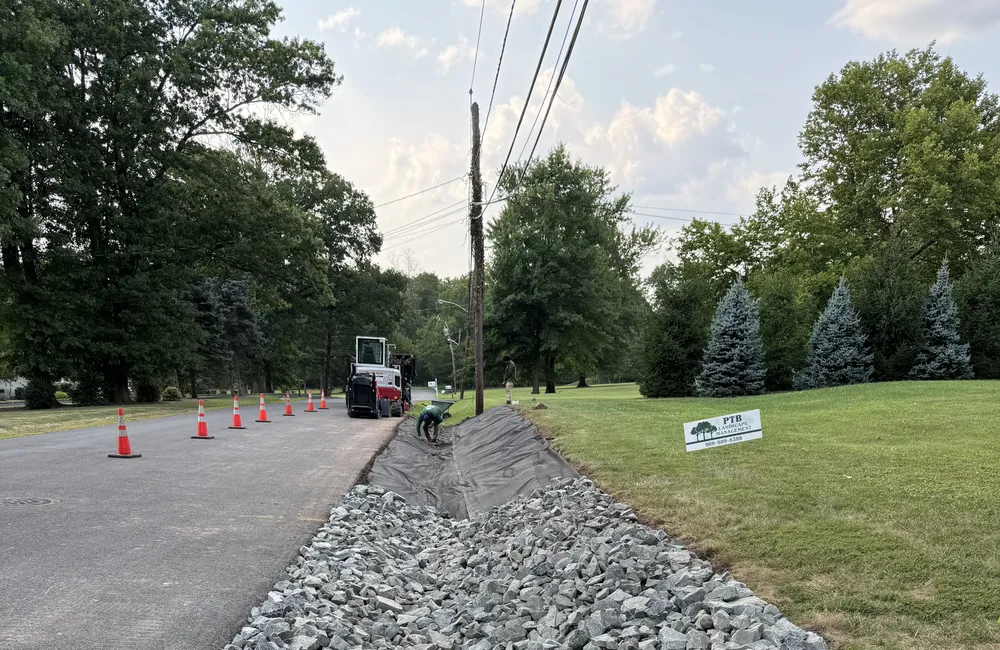
Yard drainage problems are one of the most common calls PTB gets from New Jersey property owners, especially after heavy spring storms. Standing water, soggy lawns, foundation pooling, and eroded landscape beds all point to a drainage system that isn't handling what the property is throwing at it. Here's how to identify the problem and pick the right fix.
Why Drainage Problems Are So Common in New Jersey
Four factors combine to make NJ properties especially prone to drainage issues:
Heavy Seasonal Rainfall
New Jersey experiences significant rainfall throughout the year. Spring storms and summer downpours overwhelm properties that don't have proper drainage systems in place.
Clay-Heavy Soil Conditions
Many NJ areas contain dense clay soil. Clay drains slowly, which means water remains near the surface longer than it would on sandy or loamy soil. That standing water pools where it shouldn't and takes days to disappear.
Improper Grading
Properties with incorrect slope cause water to flow toward the foundation instead of away from it. Sometimes the grading was wrong from initial construction. Sometimes it shifted over time as landscape features were added or subtracted.
Outdated or Missing Drainage Systems
Older homes often lack French drains, catch basins, or dry wells. Even when systems exist, decades of use without maintenance leave them clogged, collapsed, or undersized for current runoff volumes.
Signs You Have a Drainage Problem
Watch for these warning signs:
- Standing water on the property more than 72 hours after rainfall.
- Soggy lawn areas that never seem to dry out.
- Soil erosion or gullies forming after storms.
- Mulch consistently washing out of beds.
- Pooling water near the foundation.
- Basement dampness, wet walls, or damp smells.
- Cracks appearing in walkways or patios.
Top Yard Drainage Solutions in NJ
Four approaches solve most residential and commercial drainage problems:
1. French Drains
A perforated pipe installed in a gravel-filled trench that collects water at low points and redirects it away from problem areas.
2. Dry Wells
Underground systems that collect large volumes of water and disperse it slowly into the surrounding soil, so runoff doesn't overwhelm the property.
3. Surface Drains and Catch Basins
Ground-level systems that capture water before it pools. Effective on paved surfaces, driveways, and patios where surface runoff needs somewhere to go.
4. Regrading
Sometimes the fix is reshaping the land itself so water flows away from the home instead of toward it. Regrading is the foundation of any real long-term drainage fix.
Why DIY Drainage Fixes Often Fail
Common DIY mistakes include shallow trenches that clog fast, missing or improperly installed geotextile fabric, ignoring the actual soil composition, and inadequate filtration layers. Drainage looks simple until it doesn't work, at which point the DIY repair has to be dug up and redone.
Get a Professional Assessment
Drainage problems compound over time. Foundation damage, dead landscaping, and pavement failures are all far more expensive to fix than the drainage system that would have prevented them. PTB Landscape Management assesses NJ residential and commercial properties and designs drainage solutions that actually work. Contact PTB to walk your property.